

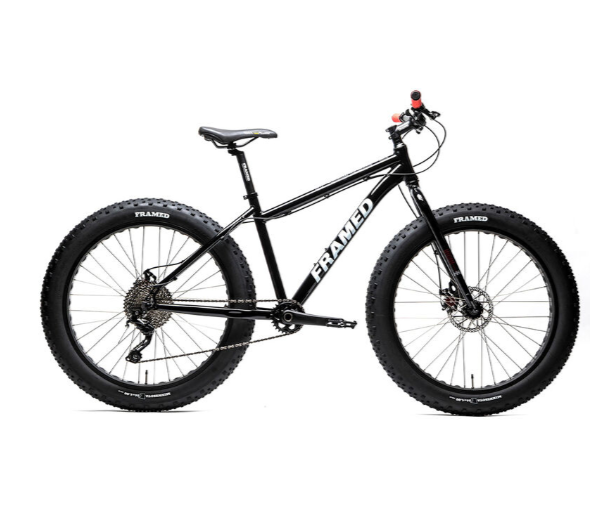
Framed Minnesota Fat Bike
- The fat bike that started it all, the Minnesota, got a facelift for 2020. We ditched the SRAM X5 1×9 drivetrain and upgraded to a Shimano Deore M6000 wide range 1×10 drivetrain. The precision of Shimano index shifting combined with a wide range 11-42 cassette and 28 tooth front chainring gives you all the gearing needed to climb up steep hills and punch it down the other side.
Discover why the Framed Minnesota fat bike has become the go-to choice for riders conquering winter terrain and beyond
The wind whips across the frozen lake, snow crystals dancing in the afternoon sun as massive 4.8-inch tires carve through powder that would stop any ordinary bicycle in its tracks. This isn’t just any winter ride – this is the Framed Bikes Minnesota experience, where adventure meets engineering excellence in one of cycling’s most exciting categories.
When most cyclists reluctantly hang up their wheels for winter, Framed Bikes Minnesota riders are just getting started. These robust fat bikes have carved out a legendary reputation among cycling enthusiasts who refuse to let snow, sand, or challenging terrain dictate their riding calendar. But what makes these bikes so special, and why have they become synonymous with adventure cycling in America’s heartland and beyond?
The Evolution of Fat Bike Excellence
The story of Framed Bikes Minnesota begins with a simple yet revolutionary concept: why should winter mean the end of cycling season? Founded by passionate cyclists who understood the unique challenges of riding in harsh conditions, Framed Bicycles set out to create fat bikes that could handle anything Mother Nature threw at them while remaining accessible to riders of all skill levels.
Fat bikes themselves emerged from the creative minds of riders in Alaska and Minnesota – places where traditional cycling wisdom suggested two-wheeled adventures were impossible for months at a time. The Framed Minnesota represents the evolution of this concept, combining decades of fat bike innovation with modern manufacturing techniques and an unwavering commitment to quality.
What sets Framed Bikes Minnesota apart in the crowded fat bike market isn’t just their impressive specifications – though those certainly matter. It’s the philosophy behind their design: creating bikes that invite exploration rather than intimidate newcomers, machines that perform exceptionally in extreme conditions while remaining comfortable and reliable for everyday adventures.
Decoding the Framed Bikes Minnesota Model Lineup
The Framed Bikes Minnesota family encompasses several distinct models, each engineered for specific riding styles and terrain preferences. At the heart of the lineup sits the flagship Minnesota model, a bike that has become virtually synonymous with accessible fat bike excellence.
The standard Framed Minnesota features a lightweight aluminum frame geometry that strikes an ideal balance between stability and maneuverability. This isn’t the tank-like construction you might expect from early fat bikes – instead, it’s a refined machine that responds predictably to rider input while maintaining the confidence-inspiring stability that makes fat bikes so addictive.
For riders seeking enhanced performance, Framed Bikes Minnesota offers upgraded variants featuring premium component packages. These higher-tier models incorporate advanced drivetrain systems, enhanced braking performance, and carefully selected components that elevate the riding experience without compromising the accessibility that makes these bikes so appealing to beginners.
The beauty of the Framed Minnesota lineup lies in its scalability. Whether you’re taking your first tentative pedal strokes on snow or you’re a seasoned fat bike veteran planning epic winter bikepacking adventures, there’s a Minnesota model configured to match your ambitions and budget.
Where Adventure Meets Accessibility: Finding Your Framed Minnesota
Acquiring a Framed Bikes Minnesota involves navigating a landscape of local bike shops, online retailers, and direct-to-consumer options. The brand has cultivated relationships with independent bike dealers across the country, particularly in regions where fat biking has gained significant traction.
Local bike shops remain the gold standard for Framed Bikes Minnesota purchases, offering the invaluable service of professional assembly, initial setup, and ongoing maintenance support. These partnerships ensure that your Minnesota arrives properly configured for your specific riding style and local conditions. More importantly, establishing a relationship with a local shop provides access to expertise that proves invaluable as you develop your fat biking skills.
Online retailers present another avenue for Framed Minnesota acquisition, often featuring competitive pricing and broader model availability. However, purchasing online requires either personal mechanical expertise or access to professional assembly services. The cost savings can be significant, but novice cyclists should factor assembly and initial tuning costs into their budget calculations.
Direct-to-consumer sales through Framed’s own channels occasionally offer exclusive models or special configurations not available through traditional retail channels. These opportunities typically coincide with seasonal promotions or new model introductions, making timing an important consideration for budget-conscious buyers.
The seasonal nature of fat bike demand creates interesting pricing dynamics for Framed Bikes Minnesota models. Late winter and early spring often yield the best deals as retailers clear inventory, while fall demand surge can create scarcity and premium pricing. Savvy buyers plan ahead, securing their Minnesota during off-season lulls to maximize value.
Investment Analysis: Understanding Framed Minnesota Pricing
Framed Bikes Minnesota pricing reflects the brand’s commitment to delivering exceptional value in the fat bike segment. Entry-level Minnesota models typically start in the $800-$1200 range, positioning them as accessible options for riders exploring fat biking without massive financial commitment.
This pricing strategy represents remarkable value when compared to the broader fat bike market, where premium models can easily exceed $3000-$4000. The Framed Minnesota achieves this affordability through strategic component selection, efficient manufacturing processes, and direct relationships with suppliers that minimize markup layers.
Mid-range Framed Bikes Minnesota configurations, featuring upgraded drivetrains, enhanced wheel sets, and premium contact points, typically fall into the $1200-$1800 price range. These models represent the sweet spot for serious recreational riders who want enhanced performance without venturing into professional-grade pricing territory.
The cost equation extends beyond initial purchase price to include long-term ownership considerations. Framed Minnesota bikes utilize standard component interfaces and widely available replacement parts, keeping maintenance costs reasonable and ensuring long-term serviceability. This approach contrasts favorably with some boutique fat bike manufacturers who rely on proprietary components that can create expensive maintenance scenarios.
When evaluating Framed Bikes Minnesota pricing, consider the total cost of entry into fat biking. While the bike itself represents the largest expense, additional costs for appropriate clothing, accessories, and potentially seasonal storage should factor into budget planning. The Minnesota’s reasonable pricing leaves room in most budgets for these essential additions.
Conquering Winter: Snow Performance Excellence
The Framed Bikes Minnesota truly shines when the snow flies and traditional cycling becomes impossible. These machines transform winter from cycling’s off-season into an entirely new realm of two-wheeled adventure, opening up landscapes that remain inaccessible to hikers and traditional cyclists alike.
Snow performance begins with tire selection, and Framed Minnesota bikes accommodate the massive rubber needed for winter excellence. The standard tire clearance allows for 4.8-inch wide tires, providing the flotation necessary to ride on top of snow rather than plowing through it. This capability transforms snow-covered trails, frozen lakes, and winter landscapes into viable cycling terrain.
But tire size alone doesn’t determine snow performance – tire pressure optimization proves equally critical. Framed Bikes Minnesota riders quickly learn that dramatically reduced tire pressures, often as low as 5-8 PSI, maximize snow contact area and improve traction. The Minnesota’s robust wheel system handles these low pressures reliably, preventing the rim damage that can plague lesser fat bikes.
The geometry of the Framed Minnesota contributes significantly to its snow prowess. The longer wheelbase and relaxed head tube angle provide stability that proves invaluable when navigating unpredictable snow conditions. Unlike traditional mountain bikes that can become twitchy and unpredictable in snow, the Minnesota maintains composure even when surface conditions change dramatically.
Winter riding technique differs substantially from traditional cycling, and the Framed Minnesota forgives the learning curve. The bike’s predictable handling characteristics allow riders to develop snow-specific skills without fighting unpredictable equipment behavior. This user-friendly nature has made countless winter converts who discovered cycling’s hidden season aboard a Minnesota.
Technical Deep Dive: Key Features That Define Excellence
The Framed Bikes Minnesota distinguishes itself through thoughtful engineering decisions that prioritize real-world performance over flashy specifications. Understanding these technical elements helps explain why the Minnesota has earned such devoted followings among fat bike enthusiasts.
Frame construction utilizes high-quality aluminum alloy tubing optimized for fat bike applications. This material choice provides excellent strength-to-weight ratios while maintaining affordability – critical considerations for a bike designed to handle extreme conditions while remaining accessible to mainstream cyclists. The frame geometry reflects years of fat bike evolution, incorporating lessons learned from early designs that proved problematic in real-world conditions.
The Minnesota’s drivetrain configuration emphasizes reliability and ease of maintenance over cutting-edge complexity. Most models feature 1x (single chainring) drivetrains that eliminate front derailleur complexity while providing adequate gear range for fat bike applications. This simplicity proves particularly valuable in winter conditions where complex shifting mechanisms can become unreliable.
Wheel and tire systems receive special attention in Framed Minnesota design. The bikes utilize fat bike-specific wheel standards that accommodate the massive tires these machines require. The wheel builds emphasize durability over weight savings, recognizing that fat bikes encounter more punishment than traditional cycling applications.
Braking systems on Framed Bikes Minnesota models typically feature mechanical disc brakes rather than hydraulic systems. This choice prioritizes maintainability and cold-weather reliability over ultimate stopping power. Mechanical brakes remain functional in extreme cold conditions where hydraulic systems can become sluggish or unreliable.
The Minnesota’s component selection philosophy extends to every system on the bike. Rather than chasing the latest technological trends, Framed focuses on proven components with established reliability records and widespread service support. This approach ensures that your Minnesota remains functional regardless of where your adventures take you.
Beginner-Friendly Excellence: Why the Minnesota Works for New Riders
One of the most remarkable aspects of Framed Bikes Minnesota design is how successfully these bikes serve novice cyclists entering the fat bike world. Fat biking can seem intimidating to newcomers, but the Minnesota’s thoughtful engineering removes many barriers that might otherwise discourage exploration.
The Minnesota’s geometry strikes an ideal balance for beginning fat bike riders. The relatively upright riding position reduces strain on back and shoulders while providing excellent visibility of terrain conditions. This comfort factor proves crucial for riders spending hours navigating unfamiliar winter landscapes or learning new technical skills.
Stability represents another key beginner advantage of Framed Minnesota bikes. The long wheelbase and relaxed steering geometry create a planted, confidence-inspiring feel that helps new riders develop skills without fighting unpredictable bike behavior. This stability particularly benefits riders transitioning from traditional mountain bikes who must adapt to fat bike handling characteristics.
The Minnesota’s forgiving nature extends to technical terrain navigation. While capable of handling challenging conditions, the bike doesn’t punish small mistakes or minor technique errors the way some high-performance machines might. This forgiveness allows beginners to push their limits gradually without fear of catastrophic consequences.
Component selection on Framed Bikes Minnesota models prioritizes ease of use over technical complexity. Simple, reliable shifting systems and intuitive brake operation reduce the mechanical learning curve for new fat bike riders. This simplicity allows beginners to focus on developing riding skills rather than mastering complex equipment operation.
The Minnesota’s reasonable pricing also supports its beginner-friendly mission. New riders can enter fat biking without massive financial commitment, reducing the pressure to maximize expensive equipment investment. This accessibility has introduced countless cyclists to fat biking who might never have tried the discipline with higher-priced alternatives.
Rubber Meets Road: Understanding Framed Minnesota Tire Options
Tire selection profoundly impacts Framed Bikes Minnesota performance, and understanding available options helps optimize these bikes for specific applications. The Minnesota platform accommodates various tire widths and tread patterns, allowing customization for different terrain types and riding styles.
The standard 4.8-inch tire width represents the sweet spot for most Framed Minnesota applications. These massive tires provide exceptional flotation on snow while maintaining reasonable rolling resistance on packed surfaces. The width offers enough air volume for comfortable low-pressure operation without becoming unwieldy in tight terrain.
For riders seeking maximum flotation capability, some Framed Bikes Minnesota configurations accommodate even wider rubber approaching 5-inch widths. These ultra-wide tires excel in deep powder conditions but sacrifice some agility and rolling efficiency. The trade-offs make sense for dedicated winter riders who prioritize snow performance above all else.
Tread pattern selection proves equally important for optimizing Framed Minnesota performance. Aggressive, widely-spaced knobs excel in soft snow conditions but create unnecessary rolling resistance on packed surfaces. Conversely, tighter tread patterns improve efficiency on hard surfaces while sacrificing traction in loose conditions.
Studded tire options transform Framed Bikes Minnesota bikes into ice-capable machines for riders tackling frozen surfaces. These specialized tires feature metal studs that provide mechanical grip on slippery surfaces, enabling confident riding on frozen lakes, icy trails, and winter commuter routes.
The Minnesota’s tubeless-ready wheel system supports modern tire technologies that reduce weight and improve ride quality. Tubeless setups eliminate inner tubes, allowing lower operating pressures while reducing puncture risks. This capability particularly benefits fat bike applications where low pressures maximize performance.
Comparative Analysis: How the Minnesota Stacks Up
In the competitive fat bike landscape, Framed Bikes Minnesota models consistently punch above their price point, delivering performance that rivals significantly more expensive alternatives. Understanding how the Minnesota compares to other options helps potential buyers make informed decisions.
Premium fat bike manufacturers often emphasize exotic frame materials like carbon fiber or titanium, creating lighter but substantially more expensive machines. The Framed Minnesota aluminum construction delivers comparable performance at a fraction of the cost while offering superior durability for novice riders who might occasionally exceed equipment limits.
Component specifications reveal where Framed Bikes Minnesota makes strategic compromises to achieve competitive pricing. Entry-level Minnesota models feature basic but reliable component groups that prioritize function over prestige. These components perform admirably in real-world conditions while keeping costs reasonable for budget-conscious buyers.
Geometry comparisons show the Framed Minnesota occupying middle ground between aggressive racing-oriented fat bikes and ultra-stable cruiser designs. This positioning makes the Minnesota versatile enough for various riding styles while remaining accessible to riders with different skill levels and physical capabilities.
Build quality represents a significant Framed Minnesota advantage over similarly priced competitors. The attention to detail in frame construction, component installation, and quality control rivals much more expensive alternatives. This quality focus translates into reliable operation and longevity that maximizes value for buyers.
Customer support and warranty coverage provide additional competitive advantages for Framed Bikes Minnesota buyers. The company’s responsive service approach and comprehensive warranty protection offer peace of mind that some competitors cannot match, particularly in the direct-to-consumer segment.
Real-World Performance: What Riders Say
Framed Bikes Minnesota reviews consistently highlight the bikes’ ability to exceed expectations, particularly considering their accessible price points. Rider feedback reveals patterns that illuminate both strengths and limitations of these popular fat bikes.
Winter performance reviews universally praise the Framed Minnesota snow capabilities. Riders report excellent flotation on powder, predictable handling in variable conditions, and reliable operation in extreme cold. Many reviewers note that the Minnesota performs comparably to fat bikes costing significantly more while offering superior value.
Beginner riders frequently comment on the Framed Minnesota approachable nature. Reviews often mention how quickly new fat bike riders develop confidence aboard the Minnesota, crediting the bike’s stable handling and forgiving characteristics. This accessibility has created devoted followings among cycling newcomers who might have been intimidated by more aggressive alternatives.
Long-term ownership reviews provide insights into Framed Bikes Minnesota durability and reliability. Most riders report trouble-free operation with basic maintenance, though some note that component upgrades eventually become desirable as skills develop. The upgrade path availability receives positive mentions in many reviews.
Criticism in Framed Minnesota reviews typically focuses on component limitations rather than fundamental design flaws. Some riders desire more sophisticated shifting systems or enhanced braking performance, though most acknowledge these limitations as reasonable compromises for the price point.
Comparative reviews frequently position the Framed Minnesota as exceptional value, often recommending these bikes over significantly more expensive alternatives for recreational riders and beginners. This consistent positioning has established the Minnesota’s reputation as the smart choice for fat bike exploration.
Engineering Excellence: Frame Materials and Construction
The Framed Bikes Minnesota frame represents sophisticated engineering designed to balance performance, durability, and affordability. Understanding the materials and construction techniques reveals why these bikes perform so reliably across diverse conditions.
Aluminum alloy selection for Framed Minnesota frames prioritizes strength and corrosion resistance over absolute weight minimization. The chosen alloys provide excellent fatigue resistance crucial for fat bike applications where frame stresses exceed those encountered in traditional cycling. This material choice ensures long-term durability even under demanding use conditions.
Frame geometry development incorporated extensive real-world testing in harsh conditions. The Framed Minnesota dimensions reflect lessons learned from early fat bike designs that proved problematic in actual use. The refined geometry provides stability without sacrificing maneuverability, creating bikes that perform predictably across skill levels.
Welding quality on Framed Bikes Minnesota frames exceeds standards typical for this price point. Clean, consistent welds provide both structural integrity and aesthetic appeal that rivals much more expensive alternatives. This attention to manufacturing detail contributes significantly to the Minnesota’s reputation for reliability.
Internal cable routing on Framed Minnesota models protects control cables from the elements while maintaining clean aesthetics. This feature particularly benefits winter riders where exposed cables can accumulate ice and snow that interferes with shifting and braking performance. The routing design allows easy maintenance access when service becomes necessary.
Frame finish quality resists the harsh conditions fat bikes commonly encounter. The powder coat systems used on Framed Minnesota frames provide excellent chip and scratch resistance while offering attractive appearance that maintains appeal over years of use. This durability focus reflects the brand’s understanding of real-world fat bike applications.
Weight Considerations and Performance Impact
Framed Bikes Minnesota weight specifications reflect the practical realities of fat bike design rather than pursuing weight minimization at any cost. Understanding how weight affects fat bike performance helps set appropriate expectations for these machines.
Complete Framed Minnesota bikes typically weigh between 32-38 pounds depending on configuration and component specifications. While heavier than traditional mountain bikes, this weight falls within reasonable ranges for fat bike applications and includes the massive tires and robust construction necessary for intended uses.
The weight distribution on Framed Bikes Minnesota models emphasizes stability and predictable handling over pure climbing performance. The relatively low center of gravity contributes to the Minnesota’s confidence-inspiring ride characteristics, though it does require more effort for steep climbing applications.
Rotational weight from the massive wheels and tires represents the most significant performance impact on Framed Minnesota bikes. The large diameter and wide tires create substantial rotational inertia that affects acceleration and climbing performance. However, this same mass provides momentum benefits for maintaining speed on flat terrain.
For most Framed Bikes Minnesota applications, absolute weight proves less critical than other performance factors. Fat biking typically emphasizes exploration and adventure over competitive performance, making the Minnesota’s reasonable weight less problematic than it might be for racing applications.
Weight reduction opportunities exist for riders who desire lighter Framed Minnesota configurations. Component upgrades can reduce several pounds while maintaining reliability, though such modifications increase overall investment beyond the base bike cost.
Terrain Mastery: Where the Minnesota Excels
Framed Bikes Minnesota design optimization targets specific terrain types where fat bikes provide unique advantages over traditional cycling equipment. Understanding these target applications helps riders maximize their Minnesota’s capabilities.
Snow-covered terrain represents the Framed Minnesota primary design focus. The massive tires and stable geometry excel in powder conditions where traditional bikes become unrideable. The Minnesota transforms winter landscapes into cycling opportunities, opening up seasonal riding possibilities that most cyclists never experience.
Sand dune exploration provides another natural application for Framed Minnesota capabilities. The flotation characteristics that work so well in snow prove equally valuable on sandy beaches and desert terrain. The low-pressure tire operation prevents the digging-in that stops traditional mountain bikes in soft sand.
Rocky and technical terrain showcases different Framed Minnesota strengths. The massive tires provide exceptional bump absorption and traction over obstacles that challenge traditional bikes. The stable platform allows riders to focus on line choice rather than fighting unpredictable bike behavior.
Bikepacking and adventure touring applications benefit from the Framed Minnesota load-carrying capabilities and comfortable geometry. The stable platform handles luggage weight well while the upright position reduces fatigue during long riding days. The Minnesota’s reliability proves valuable for remote adventures where mechanical issues could create serious problems.
Urban winter commuting represents an emerging application where Framed Bikes Minnesota bikes excel. The traction and stability advantages translate perfectly to snow-covered city streets and bike paths. The Minnesota allows year-round cycling in climates where traditional bikes become seasonal equipment.
Suspension Considerations and Ride Quality
Framed Bikes Minnesota models typically feature rigid fork construction rather than suspension systems, a design choice that reflects fat bike realities and target applications. Understanding this decision helps set appropriate expectations for ride quality and performance.
The massive tires on Framed Minnesota bikes provide natural suspension through their large air volume and flexible sidewalls. Operating at low pressures, these tires absorb impacts and vibrations that would otherwise require mechanical suspension systems. This natural damping proves particularly effective for the terrain types where fat bikes excel.
Rigid fork construction offers several advantages for Framed Minnesota applications. The simplified design reduces weight, eliminates maintenance requirements, and provides direct power transfer that benefits climbing and acceleration. For fat bike applications, these advantages often outweigh the comfort benefits that suspension might provide.
Cold weather operation represents another consideration favoring rigid forks on Framed Bikes Minnesota models. Suspension systems can become sluggish or unreliable in extreme cold conditions where many fat bike adventures occur. Rigid construction ensures consistent performance regardless of temperature conditions.
The Framed Minnesota geometry compensates for rigid construction through relaxed angles and longer wheelbase dimensions that improve ride quality over rough terrain. Combined with the natural tire suspension, this approach provides surprisingly comfortable ride characteristics without mechanical complexity.
Aftermarket suspension options exist for riders who desire enhanced comfort on their Framed Minnesota bikes. Several manufacturers offer fat bike-specific suspension forks that can be retrofit to Minnesota frames, though such upgrades require careful compatibility verification and professional installation.
Size Matters: Finding Your Perfect Framed Minnesota Fit
Framed Bikes Minnesota availability spans multiple frame sizes designed to accommodate riders across a broad range of physical dimensions. Proper sizing proves crucial for maximizing comfort, performance, and safety during fat bike adventures.
The Framed Minnesota size range typically includes small, medium, large, and extra-large options covering riders from approximately 5’2″ to 6’4″ in height. Each size maintains proportional geometry that preserves the Minnesota’s handling characteristics across the size range, ensuring consistent performance regardless of frame dimensions.
Size selection for Framed Minnesota bikes should consider intended uses beyond simple height compatibility. Riders planning aggressive technical riding might prefer slightly smaller frames for improved maneuverability, while touring and adventure applications often benefit from larger sizes that provide comfortable, upright positions.
The fat bike riding position differs from traditional mountain bikes, affecting sizing considerations for Framed Minnesota selection. The typically more upright position and different weight distribution mean that riders accustomed to aggressive mountain bike geometry might find comfort in different Minnesota sizes than their traditional preferences would suggest.
Professional fitting services can optimize Framed Minnesota setup for individual riders regardless of frame size selection. Adjustable components like stems, handlebars, and seat posts allow fine-tuning that maximizes comfort and performance within each frame size’s range.
Test riding remains the gold standard for Framed Minnesota size selection when possible. The unique characteristics of fat bike handling mean that theoretical sizing might not match personal preferences, making actual riding experience invaluable for final size decisions.
Smart Shopping: Finding Framed Minnesota Deals
Framed Bikes Minnesota pricing strategies and seasonal demand patterns create opportunities for savvy buyers to maximize value through strategic purchase timing and source selection. Understanding these market dynamics can result in significant savings.
Seasonal demand cycles significantly impact Framed Minnesota pricing and availability. Late winter and spring typically offer the best deals as retailers clear inventory to make room for traditional cycling season stock. Conversely, early fall demand surge as riders prepare for winter can create premium pricing and limited availability.
End-of-model-year clearance events provide exceptional opportunities for Framed Minnesota savings. As new model years introduce updated specifications or colorways, previous year inventory often sells at substantial discounts. These bikes typically offer identical performance at significantly reduced prices.
Regional demand variations create pricing opportunities for flexible buyers. Framed Bikes Minnesota models command premium pricing in snow-belt regions where fat biking popularity runs high, while southern markets might offer better deals due to lower local demand.
Bundle deals combining Framed Minnesota bikes with accessories often provide better overall value than separate purchases. These packages might include essential fat bike accessories like appropriate clothing, maintenance tools, or seasonal storage solutions at attractive combined pricing.
Direct manufacturer promotions occasionally offer special pricing or configuration options not available through traditional retail channels. Following Framed’s communication channels can provide early notification of these limited-time opportunities.
Manufacturing Heritage and Quality Standards
Framed Bikes Minnesota production reflects modern manufacturing approaches that balance quality control with efficient production methods. Understanding the manufacturing process provides insight into the quality and consistency these bikes deliver.
The Framed Minnesota manufacturing process utilizes overseas production facilities that meet stringent quality standards established by the parent company. These facilities employ experienced bicycle manufacturing specialists who understand the unique requirements of fat bike construction and the demanding conditions these bikes must survive.
Quality control procedures for Framed Bikes Minnesota production include multiple inspection points throughout the manufacturing process. From raw material verification through final assembly testing, each Minnesota receives comprehensive evaluation before shipping. This systematic approach ensures consistent quality across production runs.
Frame construction on Framed Minnesota bikes follows established procedures that prioritize structural integrity and longevity. Welding procedures, heat treatment processes, and finish application all follow specifications designed to create frames that exceed typical recreational cycling demands while maintaining reasonable production costs.
Component sourcing for Framed Bikes Minnesota emphasizes suppliers with established quality records and reliable delivery capabilities. This approach ensures that replacement parts remain available throughout the bike’s service life while maintaining consistent performance characteristics across production batches.
Final assembly and testing procedures verify that each Framed Minnesota meets performance standards before shipping. This includes mechanical systems testing, safety verification, and aesthetic quality inspection that ensures customer satisfaction upon delivery.
Warranty Protection and Customer Support
Framed Bikes Minnesota ownership includes comprehensive warranty coverage and customer support designed to protect buyers’ investments and ensure satisfying ownership experiences. Understanding these protections helps buyers make confident purchase decisions.
The standard Framed Minnesota warranty typically covers frame defects for multiple years while providing shorter coverage periods for components and accessories. This structure reflects the different expected service lives of various bike systems while providing meaningful protection against manufacturing defects.
Warranty claim procedures for Framed Bikes Minnesota emphasize simplicity and reasonable resolution timelines. The company’s customer service approach prioritizes problem resolution over claim denial, creating positive ownership experiences that build long-term brand loyalty.
Customer support extends beyond warranty claims to include technical assistance, maintenance guidance, and upgrade recommendations. Framed Minnesota owners benefit from knowledgeable support staff who understand fat bike applications and can provide relevant advice for maximizing equipment performance.
The warranty coverage philosophy reflects confidence in Framed Minnesota design and manufacturing quality. Comprehensive protection demonstrates the company’s commitment to standing behind their products while providing customers with peace of mind for their equipment investments.
Documentation requirements for warranty claims remain reasonable and practical for typical consumer situations. Framed Minnesota warranty administration recognizes that recreational cyclists shouldn’t need to maintain extensive documentation for normal equipment protection.
Year-Round Versatility: Beyond Winter Riding
While Framed Bikes Minnesota bikes excel in winter conditions, their versatility extends far beyond snow season applications. Understanding the Minnesota’s year-round capabilities helps justify investment for riders in various climates and riding situations.
Summer trail riding reveals different Framed Minnesota strengths that complement winter performance. The massive tires provide exceptional traction on loose surfaces like sand, gravel, and rocky terrain where traditional mountain bikes struggle. The stable platform confidence encourages exploration of challenging terrain that might intimidate riders on conventional equipment.
Beach and sand dune exploration represents perfect summer applications for Framed Minnesota capabilities. The flotation characteristics that excel in snow prove equally valuable on sandy surfaces where traditional bikes bog down. Low-pressure operation allows the Minnesota to float over sand that would stop narrow-tired bikes immediately.
Bikepacking and adventure touring benefit from Framed Minnesota load-carrying capabilities and comfortable geometry throughout riding season. The stable platform handles gear weight effectively while the upright position reduces fatigue during long days in the saddle. The Minnesota’s reliability proves valuable for remote adventures regardless of season.
Urban riding applications showcase Framed Minnesota versatility in unexpected ways. The massive tires smooth rough pavement while providing excellent visibility and presence in traffic situations. The comfortable position and stable handling make the Minnesota surprisingly effective for casual city riding and commuting applications.
The Framed Minnesota serves as an excellent single-bike solution for riders who want maximum versatility without maintaining multiple specialized machines. This multi-season capability maximizes equipment utilization while minimizing storage requirements and maintenance complexity.
Electric Evolution: E-Fat Bike Considerations
The growing popularity of electric assistance has reached fat bike applications, though Framed Bikes Minnesota electric options remain limited compared to traditional pedal-powered models. Understanding the e-fat bike landscape helps potential buyers evaluate future options.
Electric fat bikes face unique challenges that differ from traditional e-bike applications. The massive tires and robust construction create weight and power requirements that exceed typical e-bike parameters. Battery capacity must account for increased rolling resistance and the demanding conditions where fat bikes operate.
Framed Bikes Minnesota e-bike development focuses on maintaining the brand’s value proposition while incorporating electric assistance technology. This approach emphasizes practical performance over cutting-edge features, ensuring that electric Minnesota models remain accessible to mainstream buyers.
Conversion possibilities exist for riders who want to add electric assistance to existing Framed Minnesota bikes. Several aftermarket systems offer fat bike compatibility, though installation requires careful component selection and professional expertise to ensure reliable operation.
The electric fat bike market continues evolving rapidly with improving battery technology and more efficient motor systems. Framed Minnesota buyers can expect expanding electric options as the technology matures and costs decrease to match the brand’s value-oriented approach.
Range considerations prove particularly important for electric fat bike applications where remote riding often exceeds infrastructure support. Framed Minnesota electric development prioritizes practical range over maximum power output, ensuring that electric assistance enhances rather than limits adventure possibilities.
Maintenance Mastery: Keeping Your Minnesota Running
Framed Bikes Minnesota ownership success depends significantly on proper maintenance practices adapted to fat bike requirements and the demanding conditions these machines encounter. Understanding maintenance needs helps ensure long-term reliability and performance.
Basic maintenance for Framed Minnesota bikes follows traditional bicycle service procedures with modifications for fat bike-specific components. The massive tires require different pressure monitoring and care procedures compared to traditional bikes, while the robust construction typically proves more forgiving of maintenance delays.
Cleaning procedures for Framed Minnesota bikes must account for the harsh conditions these machines regularly encounter. Snow, salt, sand, and mud create maintenance challenges that exceed typical recreational cycling exposure. Regular cleaning and lubrication prove essential for maintaining reliable operation.
Seasonal maintenance schedules help Framed Minnesota owners stay ahead of potential problems while maximizing equipment life. Pre-winter preparation includes comprehensive system inspection and lubrication, while post-season service addresses wear and damage accumulated during challenging riding conditions.
Component replacement on Framed Minnesota bikes benefits from the brand’s commitment to standard interfaces and widely available parts. This approach ensures that routine maintenance remains affordable and accessible regardless of geographic location or local shop capabilities.
Professional service relationships prove valuable for Framed Minnesota owners who lack mechanical expertise or specialized tools. Establishing connections with shops experienced in fat bike service ensures access to knowledgeable technicians who understand the unique requirements of these machines.
Conclusion: Why the Framed Minnesota Defines Fat Bike Excellence
The Framed Bikes Minnesota represents far more than simply another option in the crowded fat bike market. These machines embody a philosophy that prioritizes accessibility, reliability, and real-world performance over flashy specifications or premium pricing. For riders seeking entry into fat biking’s unique world of year-round adventure, the Minnesota provides an ideal foundation that grows with developing skills and expanding ambitions.
What truly sets Framed Bikes Minnesota apart is the company’s understanding that great bikes should invite exploration rather than intimidate newcomers. The Minnesota’s approachable nature, combined with impressive technical capabilities, creates machines that serve beginners excellently while remaining relevant as riders develop expertise and tackle more challenging adventures.
The value proposition offered by Framed Minnesota bikes extends beyond initial purchase price to encompass long-term ownership satisfaction. Reliable operation, reasonable maintenance requirements, and comprehensive support create ownership experiences that justify investment while building lasting enthusiasm for fat bike adventures.
As fat biking continues evolving from niche specialty to mainstream cycling discipline, Framed Bikes Minnesota models stand positioned to introduce countless new riders to winter cycling’s unique pleasures. These bikes remove barriers that might otherwise prevent exploration while delivering performance that satisfies experienced riders seeking reliable, capable equipment.
The Minnesota’s success reflects broader trends in cycling toward equipment that prioritizes function over fashion, reliability over racing performance, and accessibility over exclusivity. In a cycling world often obsessed with the latest technology and premium pricing, Framed Bikes Minnesota proves that thoughtful engineering and reasonable pricing create better solutions for most riders.
Whether you’re contemplating your first fat bike purchase or seeking reliable equipment for serious winter adventures, the Framed Bikes Minnesota deserves serious consideration. These machines represent the intersection of performance, value, and accessibility that defines great cycling equipment – bikes that enhance adventures rather than complicate them, machines that inspire confidence rather than create anxiety, and equipment that serves riders rather than demanding service.
The Framed Minnesota isn’t just a fat bike – it’s an invitation to discover cycling’s hidden season, explore terrain that remains inaccessible to traditional bikes, and join a community of riders who refuse to let weather dictate their adventures. In a world where cycling opportunities often seem limited by conditions, climate, or terrain, the Minnesota opens doors to year-round exploration that transforms how we think about two-wheeled adventure.