
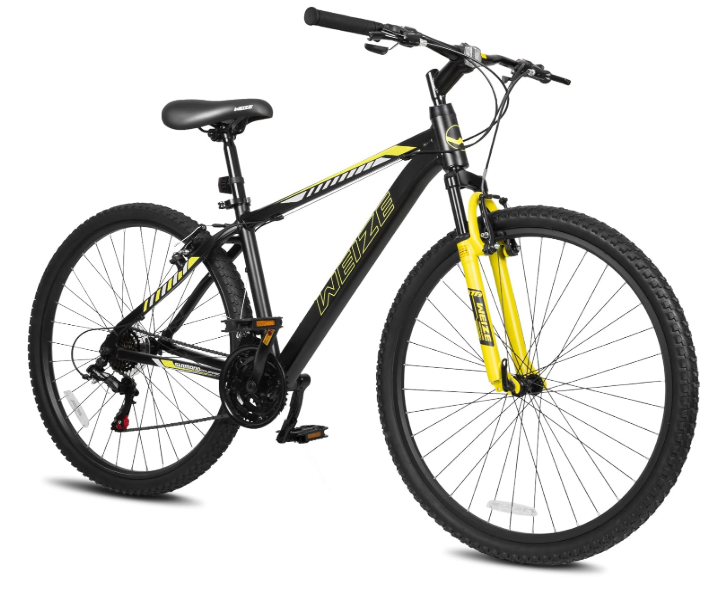
WEIZE Hardtail Mountain Bike, 29 Inch Wheels Outdoor Cycling Bike, 21-Speed Trigger Shifter, Aluminum Frame for Men and Women, Comfort Saddle, MTB Bicycle with Suspension Fork
- Hardtail MTB: with a lightweight 6061 aluminum frame and 29-inch wheels is perfect for all terrain adventures, best fit to riders 5’4″ to 6’2″ tall.
- High-quality aluminum frame: Aluminum mountain frame with modern geometry. Aluminum V-brakes provide stopping power in the front and rear of the bike.Aluminum double wall rims add lightweight strength.
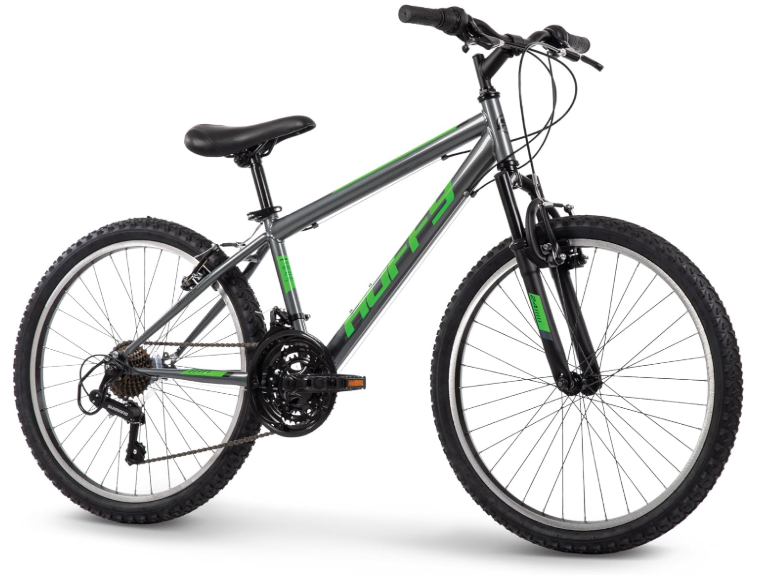
Huffy Stone Mountain Hardtail Mountain Bike for Boys/Girls/Men/Women, 20″/24″/26″ Sizes, 6 or 21 Speed Shimano Twist Shifting, Front or Dual Suspension, Comfort Saddle, Sleek Colors | Front Suspension, Dual Suspension, Comfort Saddle
- Bold Charcoal Gloss Frame: Designed with a durable and stylish charcoal gloss finish, this bike is built to withstand rugged trails and everyday rides.
- 21-Speed Shimano Twist Shifting: Features a reliable Shimano 21-speed drivetrain for smooth and precise gear changes, perfect for climbing hills and navigating various terrains.
Discover why Framed Mountain Bikes are revolutionizing the off-road cycling experience for riders of all skill levels
Picture yourself carving through a narrow single track, your tires gripping the loose gravel as you navigate between towering pines. The morning mist clings to the mountainside, and your bike responds to every subtle shift in weight, every turn of the handlebars. This is the promise that Framed Mountain Bikes deliver – a perfect harmony between rider and machine that transforms ordinary trails into extraordinary adventures.
In the ever-evolving world of mountain biking, where technology meets raw terrain, Framed has emerged as a brand that understands what riders truly need. Whether you’re a weekend warrior looking to escape the urban grind or a seasoned trail enthusiast seeking your next adrenaline rush, Framed Mountain Bikes offer a compelling blend of performance, value, and reliability that’s capturing the attention of cyclists worldwide.
Understanding the Framed Mountain Bike Philosophy
Framed Mountain Bikes represent more than just another option in an overcrowded marketplace. They embody a philosophy that mountain biking should be accessible, exciting, and transformative without breaking the bank. The brand has built its reputation on creating bikes that punch above their weight class, delivering premium features and performance at price points that make quality mountain biking achievable for a broader range of enthusiasts.
The company’s approach to bike design centers around real-world riding conditions. Rather than chasing the latest trends or creating bikes that look impressive in showrooms but struggle on actual trails, Framed focuses on practical engineering solutions that enhance the riding experience. This means robust construction, thoughtful geometry, and component choices that prioritize durability and performance over flashy aesthetics.
What sets Framed Mountain Bikes apart is their commitment to understanding their riders. The brand recognizes that not everyone needs a $5,000 carbon fiber rocket ship to enjoy mountain biking. Instead, they’ve carved out a niche by creating bikes that offer genuine performance benefits while remaining financially accessible. This democratization of quality mountain biking has made Framed a favorite among riders who want to maximize their trail time without minimizing their bank account.
Where to Find Your Perfect Framed Mountain Bike
The search for the perfect Framed Mountain Bikes begins with understanding where these machines are available. Unlike some boutique brands that limit distribution to exclusive dealers, Framed has embraced a more accessible approach to getting their bikes into riders’ hands.
Online retailers serve as the primary channel for Framed Mountain Bikes, with several reputable cycling websites offering comprehensive selections. These platforms often provide detailed specifications, customer reviews, and competitive pricing that makes comparison shopping straightforward. The online purchasing experience has been refined to include virtual bike fitting tools and detailed sizing guides that help ensure you select the right frame size for your body and riding style.
Local bike shops represent another excellent avenue for acquiring Framed Mountain Bikes. Many independent dealers have embraced the brand due to its strong value proposition and customer satisfaction rates. Working with a local shop provides the advantage of professional assembly, initial tune-ups, and ongoing maintenance support. Additionally, experienced shop mechanics can offer valuable insights about how different Framed models might suit your specific riding preferences and local trail conditions.
Seasonal bike exhibitions and cycling trade shows occasionally feature Framed Mountain Bikes, providing opportunities to see multiple models in person and sometimes take advantage of show-specific promotions. These events offer the unique chance to speak directly with brand representatives and gain deeper insights into the engineering philosophy behind different models.
Investment Considerations for Framed Mountain Bikes
The financial aspect of acquiring Framed Mountain Bikes deserves careful consideration, as these bikes occupy a sweet spot in the market that balances performance with affordability. Entry-level models typically start in the range that makes them accessible to new riders or those upgrading from department store bikes, while still offering genuine mountain bike capabilities.
Mid-range Framed Mountain Bikes represent perhaps the brand’s strongest value proposition. These models incorporate many premium features found on more expensive bikes while maintaining price points that won’t require a second mortgage. Features like quality suspension components, reliable drivetrains, and durable wheel sets come together in packages that deliver exceptional performance per dollar invested.
The top-tier Framed Mountain Bikes approach price ranges where they compete directly with offerings from more established brands. However, even at these higher price points, Framed maintains its value-focused approach, often including premium components or frame features that would cost significantly more from other manufacturers.
When evaluating the cost of Framed Mountain Bikes, it’s important to consider the total cost of ownership. These bikes are designed with maintenance and longevity in mind, using standard components that are readily available and reasonably priced. This approach means that keeping your Framed bike running smoothly won’t require specialized parts or expensive proprietary components.
Perfect Entry Point for Mountain Biking Newcomers
Framed Mountain Bikes have earned a reputation as excellent choices for beginners entering the world of off-road cycling. The brand’s approach to bike design prioritizes user-friendly characteristics that help new riders build confidence while developing their skills.
The geometry of Framed Mountain Bikes typically favors stability over aggressive race-oriented positioning. This design philosophy means that new riders can focus on learning trail navigation and bike handling skills without fighting against a bike that demands perfect body positioning. The relaxed geometry provides a comfortable riding position that reduces fatigue during longer rides, allowing beginners to extend their adventures as their fitness improves.
Component selection on entry-level Framed Mountain Bikes emphasizes reliability and ease of use. Gear systems are chosen for their intuitive operation and low maintenance requirements rather than maximum gear range or featherweight construction. This approach means that new riders can concentrate on enjoying their rides rather than constantly adjusting or maintaining complex mechanical systems.
The durability built into Framed Mountain Bikes serves beginning riders particularly well. Learning mountain biking inevitably involves some crashes, chain drops, and minor mishaps. Framed bikes are engineered to handle these learning experiences without suffering catastrophic failures or requiring expensive repairs. This robustness provides peace of mind for new riders and their families investing in mountain biking equipment.
Perhaps most importantly, Framed Mountain Bikes offer a genuine mountain biking experience from day one. Unlike department store bikes that may look similar but lack the fundamental capabilities needed for trail riding, Framed bikes provide the performance foundation that allows riders to progress naturally as their skills develop.
Exploring the Most Celebrated Framed Models
The lineup of Framed Mountain Bikes includes several models that have garnered particular attention from riders and industry observers. Each model represents a different approach to solving specific riding challenges while maintaining the brand’s core values of performance and value.
The hardtail models in the Framed Mountain Bikes collection have gained recognition for their efficient power transfer and climbing ability. These bikes excel in cross-country applications where pedaling efficiency matters more than full suspension comfort. The rigid rear triangle creates a direct connection between rider input and forward motion, making these models particularly appealing to riders who prioritize fitness and speed over technical trail features.
Full suspension Framed Mountain Bikes showcase the brand’s understanding of modern trail riding demands. These models balance comfort and capability, providing enough suspension travel to handle rough terrain while maintaining the climbing efficiency needed for all-day adventures. The suspension designs prioritize reliability and serviceability, using proven linkage systems and quality shock components.
All-mountain oriented Framed Mountain Bikes represent the brand’s approach to versatile trail riding. These models feature geometry and component specifications that work well across a wide range of trail conditions, from smooth single track to technical rock gardens. The versatility of these bikes makes them excellent choices for riders who want one bike capable of handling diverse riding opportunities.
Specialty models within the Framed Mountain Bikes range address specific riding niches. Whether focused on plus-size tires for enhanced traction, aggressive geometry for downhill performance, or lightweight construction for racing applications, these models demonstrate the brand’s commitment to serving the full spectrum of mountain biking interests.
Competitive Analysis in the Mountain Bike Landscape
Understanding how Framed Mountain Bikes position themselves relative to other brands requires examining the broader mountain bike market dynamics. The cycling industry spans an enormous range, from budget-oriented department store bikes to exotic custom builds costing more than many automobiles.
Framed Mountain Bikes deliberately target the middle ground where genuine mountain bike performance meets reasonable pricing. This positioning puts them in direct competition with other value-focused brands while offering alternatives to riders considering entry-level models from premium manufacturers.
Compared to boutique or custom bike builders, Framed Mountain Bikes sacrifice some exclusivity and hand-crafted details in favor of broader availability and lower pricing. However, they maintain quality standards that exceed most mass-market alternatives, creating a compelling middle path for discerning riders.
When measured against established premium brands, Framed Mountain Bikes often provide similar performance capabilities at significantly lower price points. While they may not carry the same prestige or offer the most cutting-edge innovations, they deliver the fundamental mountain biking experience that matters most to the majority of riders.
The comparison with direct-to-consumer brands reveals interesting parallels in business philosophy. Like other successful online-focused bike companies, Framed eliminates traditional retail markups to offer better value. However, they’ve managed to maintain broader dealer support, providing customers with more purchasing and service options.
Materials Engineering and Construction Quality
The construction of Framed Mountain Bikes reflects careful consideration of material properties, manufacturing costs, and real-world durability requirements. The brand’s approach to materials selection prioritizes practical performance over exotic specifications that may look impressive on paper but offer limited real-world benefits.
Aluminum remains the primary frame material for most Framed Mountain Bikes, chosen for its excellent strength-to-weight ratio, corrosion resistance, and cost-effectiveness. The aluminum alloys used in Framed frames are specifically selected for their fatigue resistance and weldability, ensuring long-term durability under the stresses of mountain biking. The manufacturing processes employed create frames that balance stiffness for efficient power transfer with enough compliance for comfort on rough terrain.
Steel construction appears in certain Framed Mountain Bikes models where its unique properties provide specific advantages. Steel’s natural vibration damping characteristics and repairability make it an excellent choice for riders who prioritize comfort and long-term serviceability. The steel frames in the Framed lineup use modern alloys and construction techniques that minimize weight penalties while maximizing the material’s inherent benefits.
Carbon fiber components and frames represent the premium end of the Framed Mountain Bikes spectrum. While not as extensively used as in some high-end brands, carbon fiber appears where its properties provide clear performance advantages. The carbon fiber used in Framed bikes undergoes rigorous testing to ensure it meets the durability standards expected from mountain bike components.
The quality control processes governing Framed Mountain Bikes production emphasize consistency and reliability. Each frame undergoes inspection procedures designed to identify potential issues before bikes reach customers. This attention to manufacturing quality helps ensure that riders receive bikes that perform as designed from the first ride through years of trail adventures.
Trail Riding Excellence and Capability
Framed Mountain Bikes have been specifically engineered with trail riding as their primary mission. Trail riding represents the heart of mountain biking for most enthusiasts, combining elements of cross-country efficiency with technical challenge and natural beauty. The bikes excel in this environment through thoughtful design choices that enhance the trail riding experience.
The geometry of Framed Mountain Bikes reflects modern understanding of how bike positioning affects trail performance. Head tube angles provide stability during descents while maintaining enough agility for tight switchbacks. Seat tube angles position riders optimally for efficient climbing without compromising descending capability. The resulting geometry creates bikes that feel natural and confidence-inspiring across the varied terrain encountered on typical trail rides.
Suspension design on full-suspension Framed Mountain Bikes prioritizes the kind of performance that matters most for trail riding. Rather than chasing maximum travel numbers or exotic linkage designs, these bikes focus on suspension that works effectively across the range of impacts and terrain features encountered on real trails. The suspension tuning balances pedaling efficiency with bump absorption, allowing riders to maintain momentum while staying comfortable.
Component selection for trail-oriented Framed Mountain Bikes emphasizes reliability and versatility. Drivetrain components provide gear ranges suitable for steep climbs and fast descents without unnecessary complexity. Brake systems offer consistent stopping power in varied conditions without requiring constant adjustment. Wheel and tire combinations balance rolling efficiency with traction and durability.
The overall trail riding performance of Framed Mountain Bikes creates experiences that keep riders coming back for more. These bikes inspire confidence to tackle increasingly challenging terrain while remaining manageable for riders still developing their skills. The combination of capability and approachability makes them excellent companions for exploring new trails and pushing personal boundaries.
Downhill Performance and Capabilities
While Framed Mountain Bikes may not be purpose-built downhill racing machines, many models offer impressive capability when the trail points downward. The brand’s understanding of rider needs extends to recognizing that most mountain bikers encounter significant descents during their adventures, even if they’re not specifically seeking out downhill-focused riding.
The frame geometry of trail-oriented Framed Mountain Bikes incorporates design elements that enhance descending confidence. Longer wheelbases provide stability at speed, while slacker head tube angles improve control during steep descents. These geometric choices create bikes that feel planted and predictable when gravity becomes the primary driving force.
Suspension systems on Framed Mountain Bikes designed for all-mountain or trail riding provide sufficient capability for most downhill situations encountered by typical riders. While they may not offer the extreme travel of dedicated downhill bikes, they provide enough suspension to handle rock gardens, root sections, and moderate drops with confidence.
Braking systems on Framed Mountain Bikes are specified with downhill performance in mind. Disc brakes provide consistent stopping power regardless of weather conditions, while brake rotor sizing and caliper selection ensure adequate heat dissipation during extended descents. The modulation characteristics of these brake systems allow riders to control their speed precisely without worry about sudden lock-ups or fade.
The limitation of Framed Mountain Bikes in pure downhill applications comes primarily from their multi-purpose design philosophy. Bikes optimized for climbing and general trail riding necessarily make compromises that may limit their performance in the most extreme downhill situations. However, for the vast majority of mountain biking scenarios, including aggressive trail riding and bike park visits, these bikes provide more than adequate capability.
Size Options and Fit Considerations
Framed Mountain Bikes are available in comprehensive size ranges designed to accommodate riders across the physical spectrum. The brand recognizes that proper bike fit forms the foundation of enjoyable and safe mountain biking, investing considerable effort in developing geometry charts and sizing recommendations that help riders select appropriate frames.
The sizing philosophy behind Framed Mountain Bikes balances traditional mountain bike fit principles with modern understanding of how geometry affects performance. Frame sizes are designed to provide appropriate standover clearance while optimizing reach and stack dimensions for different rider proportions. This approach ensures that riders can achieve comfortable and efficient riding positions regardless of their physical characteristics.
Smaller frame sizes in the Framed Mountain Bikes lineup receive particular attention to detail. Rather than simply scaling down larger designs, these frames incorporate geometry adjustments that account for the different proportional needs of shorter riders. This careful attention to small frame design ensures that petite riders enjoy the same performance benefits as their larger counterparts.
Larger sizes in the Framed Mountain Bikes range address the needs of taller riders without simply stretching frame dimensions. The geometry adjustments maintain appropriate handling characteristics while providing the additional space needed for comfortable fit. These larger frames often incorporate structural reinforcements needed to maintain stiffness and durability with extended dimensions.
The sizing guidance provided by Framed includes detailed measurement instructions and fit recommendations that go beyond simple height charts. Riders are encouraged to consider their riding style, flexibility, and personal preferences when selecting frame sizes. This comprehensive approach to sizing helps ensure that customers receive bikes that fit properly from the first ride.
Performance Reviews and User Experiences
The mountain biking community’s response to Framed Mountain Bikes provides valuable insights into real-world performance and satisfaction levels. Reviews from both professional cycling publications and everyday riders paint a picture of bikes that consistently exceed expectations relative to their price points.
Professional reviews of Framed Mountain Bikes frequently highlight the brand’s success in delivering premium features at accessible price points. Test riders consistently note the solid construction, reliable components, and thoughtful design choices that make these bikes competitive with more expensive alternatives. The consensus among professional reviewers suggests that Framed has successfully identified and addressed the key performance factors that matter most to typical mountain bikers.
User reviews from actual owners of Framed Mountain Bikes provide perhaps even more valuable insights into long-term satisfaction and performance. These reviews consistently emphasize the bikes’ reliability, comfort, and capability across diverse riding conditions. Owners frequently express surprise at their bikes’ performance relative to expectations, with many noting that their Framed bikes have exceeded their initial performance assumptions.
The durability of Framed Mountain Bikes receives particular praise in long-term user reviews. Riders report thousands of miles of trouble-free operation with minimal maintenance requirements beyond normal wear items. This reliability record builds confidence among potential buyers and contributes to the brand’s growing reputation for quality.
Critical feedback in reviews of Framed Mountain Bikes tends to focus on areas where the brand’s value-oriented philosophy results in component choices that prioritize cost-effectiveness over premium performance. However, most reviewers acknowledge that these compromises are reasonable given the price points involved and that the overall package delivers exceptional value.
Weight Characteristics and Performance Impact
The weight profile of Framed Mountain Bikes reflects the brand’s balanced approach to design priorities. Rather than pursuing minimum weight at any cost, these bikes are engineered to achieve reasonable weights while maintaining durability, affordability, and performance across varied riding conditions.
Entry-level Framed Mountain Bikes typically carry weights that are competitive with similarly priced bikes from other manufacturers. While they may not achieve the featherweight specifications of premium models costing significantly more, they maintain weights that don’t impede climbing performance or handling agility. The weight distribution in these bikes prioritizes practical performance over absolute minimums.
Mid-range Framed Mountain Bikes demonstrate the brand’s ability to reduce weight through intelligent design and component selection without dramatically increasing costs. These models often achieve weight reductions through frame design optimization and carefully selected lightweight components that don’t sacrifice reliability. The resulting bikes feel noticeably more nimble than entry-level models while remaining robust enough for aggressive riding.
The premium Framed Mountain Bikes models approach weight specifications that compete directly with much more expensive alternatives. These bikes incorporate lightweight materials and components where they provide clear performance benefits, resulting in machines that climb efficiently and handle responsively. The weight savings in these models come from proven technologies rather than experimental approaches that might compromise long-term reliability.
Weight distribution in Framed Mountain Bikes receives careful attention during design. The positioning of heavy components like motors in electric models or suspension elements in full-suspension bikes aims to maintain balanced handling characteristics. This attention to weight distribution often proves more important for actual riding performance than absolute weight numbers.
Suspension Technology and Design Philosophy
The suspension systems found on Framed Mountain Bikes represent thoughtful engineering that prioritizes real-world performance over marketing specifications. The brand’s approach to suspension design emphasizes reliability, serviceability, and appropriate performance for the intended riding applications.
Hardtail Framed Mountain Bikes feature suspension forks that balance performance with cost-effectiveness. These forks provide genuine off-road capability while maintaining the reliability needed for regular trail use. The suspension designs chosen for Framed hardtails emphasize consistent performance across varied terrain rather than maximum adjustability or exotic construction.
Full-suspension Framed Mountain Bikes incorporate rear suspension designs that have proven effective in real-world applications. Rather than chasing the latest linkage innovations or suspension trends, these bikes use established designs that provide predictable performance and straightforward maintenance. The suspension kinematic characteristics are tuned for the kind of riding most mountain bikers actually do, balancing pedaling efficiency with bump absorption.
The suspension components selected for Framed Mountain Bikes come from reputable manufacturers known for reliability and service support. This approach ensures that riders can maintain their suspension systems easily and cost-effectively over the long term. The component specifications are matched carefully to frame designs to optimize overall performance.
Suspension tuning on Framed Mountain Bikes reflects the brand’s understanding of typical rider weights and riding styles. The spring rates and damping characteristics are selected to work well for average riders without requiring extensive suspension knowledge or frequent adjustments. This approach makes the bikes more accessible to riders who want to focus on riding rather than constant mechanical tuning.
Durability Standards for Off-Road Adventures
Framed Mountain Bikes are engineered with the understanding that mountain biking subjects equipment to significant stresses and impacts. The brand’s approach to durability emphasizes robust construction and quality materials that can withstand the demands of regular off-road riding without frequent failures or maintenance issues.
Frame construction in Framed Mountain Bikes prioritizes long-term structural integrity over minimum weight or exotic appearance. The welding quality, joint design, and material selection all contribute to frames that can handle the repeated loading cycles and impact forces encountered during mountain biking. This robust construction provides confidence for riders tackling challenging terrain.
Component selection for Framed Mountain Bikes emphasizes proven reliability over cutting-edge features that might not have established service records. Drivetrains, brake systems, and wheel components are chosen from manufacturers with strong reputations for producing durable mountain bike parts. This conservative approach to component selection helps ensure long-term reliability.
The testing procedures applied to Framed Mountain Bikes during development include real-world riding scenarios that simulate the stresses encountered during typical mountain biking adventures. These tests help identify potential weak points before bikes reach customers, contributing to the overall reliability of the final products.
Quality control processes for Framed Mountain Bikes include inspections designed to catch manufacturing defects that could compromise durability. The attention to assembly quality and component installation helps ensure that bikes are built to last from the moment they leave the factory.
Warranty Protection and Customer Support
Framed Mountain Bikes come with warranty coverage that demonstrates the brand’s confidence in their construction quality and manufacturing processes. The warranty terms provide protection against defects while establishing reasonable expectations for normal wear and maintenance responsibilities.
The frame warranty on Framed Mountain Bikes typically covers structural failures and manufacturing defects for an extended period, providing peace of mind for riders investing in these bikes. The warranty terms are clearly defined to help customers understand what is covered and what constitutes normal wear versus warrantable defects.
Component warranties on Framed Mountain Bikes follow industry standards established by the individual component manufacturers. This approach ensures that customers receive appropriate protection for each part of their bike while maintaining access to established service networks for warranty claims and repairs.
Customer service support for Framed Mountain Bikes includes technical assistance, warranty processing, and general product information. The brand maintains support channels that help customers resolve issues and maintain their bikes properly. This ongoing support contributes to long-term customer satisfaction and bike reliability.
The warranty claim process for Framed Mountain Bikes is designed to be straightforward and fair, helping customers resolve legitimate issues without unnecessary complications. Clear documentation requirements and reasonable processing times contribute to positive customer experiences during the rare occasions when warranty service is needed.
Options for Young and Smaller Riders
Framed Mountain Bikes recognizes that mountain biking appeals to riders across all age groups and physical sizes. The brand offers options specifically designed for younger riders and adults of smaller stature, ensuring that everyone can enjoy quality mountain biking experiences regardless of their size.
Youth-specific models in the Framed Mountain Bikes lineup feature appropriate sizing, component selection, and design elements that account for the unique needs of younger riders. These bikes avoid the common mistake of simply creating miniaturized adult bikes, instead incorporating design elements that work effectively for developing riders.
The geometry of smaller Framed Mountain Bikes is carefully adjusted to maintain appropriate handling characteristics while providing proper fit for shorter riders. The frame proportions account for the different body proportions typical of younger riders, ensuring comfortable and controllable riding positions.
Component selection for youth-oriented Framed Mountain Bikes emphasizes ease of use and appropriate sizing. Brake lever reach, gear shifter positioning, and crank arm lengths are all selected to match the physical capabilities and reach limitations of younger riders. This attention to ergonomic details helps young riders develop confidence and skills more effectively.
The durability built into youth Framed Mountain Bikes acknowledges that young riders may be harder on equipment as they develop their skills. Robust construction and reliable components help ensure that these bikes can withstand the learning process while providing years of riding enjoyment.
Electric Mountain Bike Innovations
The electric mountain bike segment represents an exciting area where Framed Mountain Bikes has embraced new technology while maintaining their core values of performance and value. Electric mountain bikes open up new riding opportunities and extend the capabilities of riders across different fitness levels and physical abilities.
The electric Framed Mountain Bikes feature motor systems that provide natural-feeling assistance without overwhelming the riding experience. The power delivery is tuned to enhance rather than replace rider effort, maintaining the fundamental character of mountain biking while extending range and climbing capability.
Battery technology in electric Framed Mountain Bikes balances capacity with weight and cost considerations. The battery placement and integration maintain the bikes’ handling characteristics while providing sufficient range for typical mountain biking adventures. The charging systems and battery management are designed for ease of use and long-term reliability.
The frame design of electric Framed Mountain Bikes accommodates the additional components required for electric assist while maintaining structural integrity and handling characteristics. The integration of motor, battery, and control systems is executed thoughtfully to preserve the essential mountain biking experience.
Component selection for electric Framed Mountain Bikes accounts for the additional stresses and different usage patterns associated with electric assist. Brake systems, drivetrains, and wheel components are selected to handle the increased speeds and extended riding sessions that electric assist enables.
Accessory Compatibility and Customization Options
Framed Mountain Bikes are designed with standard mounting points and component interfaces that ensure compatibility with a wide range of aftermarket accessories and upgrades. This thoughtful approach to standardization allows riders to customize their bikes according to their specific needs and preferences.
The frame designs of Framed Mountain Bikes incorporate standard mounting points for common accessories like bottle cages, fenders, racks, and lighting systems. These mounting options are implemented without compromising frame strength or appearance, providing practical functionality for riders who want to adapt their bikes for different riding scenarios.
Component compatibility on Framed Mountain Bikes follows industry standards that ensure easy upgrades and replacements. Standard bottom bracket threads, headset sizes, and axle specifications mean that riders can upgrade components or perform maintenance using commonly available parts and tools.
The wheel systems on Framed Mountain Bikes use standard hub spacing and brake mount configurations that provide compatibility with a wide range of aftermarket wheels, tires, and brake systems. This standardization allows riders to customize their bikes’ performance characteristics through wheel and tire upgrades.
Suspension compatibility on full-suspension Framed Mountain Bikes follows established mounting standards that allow for shock upgrades and service using standard tools and procedures. This approach ensures that riders can maintain and modify their suspension systems without requiring specialized knowledge or proprietary parts.
Cross-Country Performance Excellence
Framed Mountain Bikes designed for cross-country applications demonstrate the brand’s understanding of efficiency, weight optimization, and performance characteristics that matter for this demanding discipline. Cross-country riding requires bikes that excel at climbing, maintain speed on varied terrain, and provide the efficiency needed for longer distance adventures.
The geometry of cross-country oriented Framed Mountain Bikes prioritizes pedaling efficiency and climbing performance while maintaining enough stability for technical descents. The positioning created by these geometric choices allows riders to generate maximum power during climbs while remaining comfortable during extended rides.
Frame construction in cross-country Framed Mountain Bikes emphasizes stiffness and weight optimization without sacrificing the durability needed for regular training and racing. The frame designs transfer pedaling power efficiently while providing enough compliance for comfort during long rides over varied terrain.
Component selection for cross-country Framed Mountain Bikes focuses on lightweight, efficient parts that enhance performance without compromising reliability. Drivetrain components provide the gear ranges needed for steep climbs and fast sections while maintaining the precision needed for competitive riding.
The wheel and tire combinations on cross-country Framed Mountain Bikes balance rolling resistance with traction and durability. These choices reflect the multi-surface nature of cross-country riding, where efficiency on smoother sections must be balanced with grip and control on technical terrain.
Value Propositions and Special Offers
The value proposition of Framed Mountain Bikes extends beyond simple price comparisons to encompass the total ownership experience. The brand’s approach to value creation includes not only competitive pricing but also long-term reliability, service support, and resale value considerations.
Seasonal promotions and special offers on Framed Mountain Bikes provide opportunities for additional savings, though the brand’s everyday pricing already represents strong value relative to comparable bikes from other manufacturers. These promotional opportunities often coincide with model year transitions or industry trade shows.
The component specifications included with Framed Mountain Bikes often exceed expectations for the price points involved. Rather than cutting corners on less visible components, the brand tends to provide quality parts throughout the bike, resulting in more satisfying ownership experiences.
Long-term value considerations for Framed Mountain Bikes include factors like parts availability, service support, and resale value. The brand’s use of standard components and established designs helps ensure that owners can maintain their bikes cost-effectively over many years of riding.
The total cost of ownership for Framed Mountain Bikes compares favorably to alternatives when factors like reliability, maintenance costs, and upgrade potential are considered. This comprehensive value proposition makes these bikes attractive to budget-conscious riders who don’t want to compromise on performance or quality.
Conclusion: Your Next Adventure Awaits
Framed Mountain Bikes represent more than just another option in the crowded mountain bike marketplace. They embody a philosophy that quality mountain biking should be accessible, reliable, and inspiring without requiring a premium price tag. Through thoughtful engineering, careful component selection, and a deep understanding of what riders actually need, Framed has created bikes that consistently exceed expectations while remaining financially attainable.
The journey of mountain biking begins with choosing the right bike, and Framed Mountain Bikes offer compelling arguments for riders across the experience spectrum. Whether you’re taking your first tentative pedal strokes on a local trail or planning epic backcountry adventures, these bikes provide the foundation for memorable experiences and personal growth.
The trails are waiting, and your perfect riding companion might just wear the Framed badge. In a world where mountain biking can sometimes seem like an exclusive pursuit reserved for those with unlimited budgets, Framed Mountain Bikes prove that exceptional experiences are within reach of riders who simply want to embrace the adventure that awaits beyond the pavement.
Every trail tells a story, and every ride creates memories. With Framed Mountain Bikes, those stories and memories are limited only by your imagination and the next turn in the trail ahead.